Nature Trust Malta - News
Wed, Apr 18, 2012
Nature Trust (Malta) is 50 years old
PRESS RELEASE
Nature Trust (Malta) is 50 years old
President George Abela attended an event marking the beginning of Nature Trust (Malta)’s 50th anniversary celebrations at Xrobb l-Għaġin Nature Park and Sustainable Development Centre in Delimara this morning.
The President was one of 50 personalities, ranging from politicians and business people to singers and actors, who planted a tree each to mark the environment NGO’s 50th birthday.
Nature Trust founding member Guido Lanfranco spoke about the way things have changed since the NGO was set up 50 years ago. He explained that back then, people labelled him as a strange person, a lunatic even, when he started studying plants and insects.
Nature Trust executive president Vince Attard spoke about the way the NGO has evolved over the years, current projects, and the problems it has
had to face, not least those related to vandalism. While expressing appreciation for the support of a number of sponsors, Mr Attard observed that the financial crisis naturally had a negative effect on the amount of financial assistance that companies could offer.
President George Abela, on his part, praised the work carried out by Nature Trust’s volunteers. Among other things, he mentioned the work in the field of education. He said a group of children had taught him about the national tree, the Sandarac Gum Tree (l-Għargħar), and had even shown him one in the grounds of San Anton Palace. This type of education is important from a socio-economic point of view, not only in terms of environmental awareness, noted Dr Abela.
Nature Trust is a privileged partner of the World Wildlife Fund (WWF). It is one if the oldest and largest environment NGOs dealing with the natural environment of the Maltese Islands. When it was set up on 12 December 1962, the NGO was called the Natural History Society of Malta.
The name Nature Trust (Malta) came about in January 1999 when a merger of four NGOs took place – the Society for the Study and Conservation
of Nature (formerly known as Natural History Society of Malta) founded 1962, Arbor founded 1983, Verde founded 1997 and Marine Life Care Group (MLCG).
Over the years it has worked and lobbied hard to get legal protection for various plants and animals in the Maltese Islands, helping to save some of the local endemic species from extinction, Today the NGO is very active in environmental education through various means, as it strongly believes that education is the best tool to create awareness on nature conservation.
The organisation has also been carrying out several environmental projects such as afforestation, habitat conservation and the creation of marine protected areas.
Xrobb l-Għaġin Nature Park and Sustainable Development Centre, where today’s event was held, covers more than 155,000 square metres on a jutting peninsula with scenic views in the Delimara area.
The purpose of the project is to educate the public and carry out research on sustainable development solutions with a view to promoting wastewater management and the use of renewable energy, and also to safeguard biodiversity.
Xrobb l-Għaġin will be open to the public between 9am and 5pm this coming Saturday and Sunday, and Nature Trust volunteers will be available to take visitors on guided tours on the hour. The NGO is doing its best to try extending the centre’s opening hours, and next week will be open between 9am and 5pm. For further information please email info@naturetrustmalta.org.
Photo captions
DOI_3830: Left to right – Prime Minister Lawrence Gonzi, President George Abela, Archbishop Paul Cremona, Nature Trust executive president Vince Attard and others on a short walk around Xrobb l-Għaġin Nature Park
DOI_3783: Left to right – Prime Minister Lawrence Gonzi, Nature Trust founding member Guido Lanfranco (addressing those present), President George Abela, Nature Trust youths officer Zach Engerer and Nature Trust executive president Vince Attard
DOI_3792: Prime Minister Lawrence Gonzi looks on as Nature Trust founding member Guido Lanfranco addresses those who attended the event at Xrobb l-Għaġin
Tue, Mar 27, 2012
Press Release
Clean-up activity in Pembroke
Two large skips were filled with separated waste in less than two hours during a clean-up of part of the Pembroke Natura 2000 site on Friday 16 March. The activity was organised by Nature Trust (Malta) in collaboration with the U.S. Embassy, the Malta Tourism Authority, the Armed Forces of Malta, and the Pembroke local council. The crew of the USS Mount Whitney, as well as AFM personnel participated in the clean-up.
The waste collected included metal tanks, furniture, barbeque waste, rubble waste, papers, wood, and metal bars among other items. While thanking those who participated in the activity for their time and dedication, Nature Trust executive president Vincent Attard said: “It was commendable to see the US Navy and the AFM working together towards nature conservation on our Islands. Mr Attard added that it is a shame that some Maltese still consider the countryside as the dump yard for their waste, when today our country has a sufficient bulky waste disposal system and civic amenity sites. Furthermore our country depends on tourism and such irresponsible dumping is not helping Malta’s economy and jobs.”
U.S. Chargé d’Affaires Arnold H. Campbell, who visited the clean-up site to offer his encouragement to the volunteers, said, “I am proud to see the best of U.S. Navy traditions being put into practice here in Malta. In every country they visit, U.S. Navy crewmembers consistently volunteer to reciprocate the warm hospitality they receive by participating in various community projects. The apparent camaraderie between the Maltese soldiers and the American sailors is synonymous with the excellent bilateral relationship our two countries enjoy.”
Pembroke is an important site from an ecological point of view. It is home to various orchids and endemic plants, as well as a variety of fauna such as chameleons, hedgehogs, black whip snakes and others.
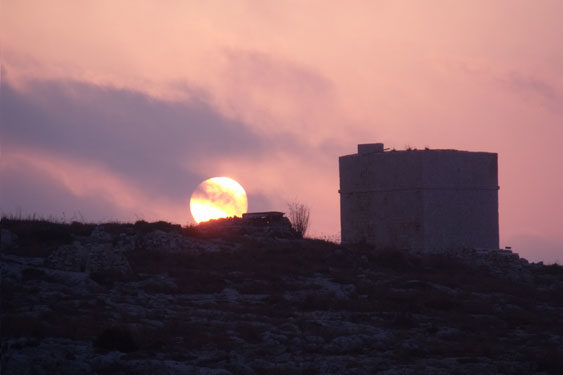
From a historical point of view, there is the Madliena Tower, which Fondazzjoni Wirt Artna obtained from the government for restoration and management purposes in 2009. The tower was built in the mid-17th century during the reign of Grandmaster De Redin as part of the construction of a chain of 13 other towers along the coast, whose purpose was to deter smuggling and warn about the presence of corsairs and pirates. In 1771, a rock-hewn fougasse was added as additional protection to the nearby inlet.
During the early part of the British period, the tower was used as an anti-smuggling post until it was ceded to the military, which used it as a flag post to mark the event of live firing at the nearby musketry and artillery ranges. During World War II the tower was also used as a beach post and a beach-gun position was also added.
Wed, Mar 14, 2012
PR Official opening of Mater Dei Mediterranean woodland
Health Minister Joe Cassar officially opened an area that has been converted into a Mediterranean woodland close to the Mater Dei Mortuary building this morning. A piece of degraded land forming part of Wied Għollieqa was restored and converted into a quiet, educational area in the grounds surrounding the hospital.
This was a joint venture between Mater Dei Hospital, GO plc and Nature Trust (Malta). The NGO planned the restoration of the site in a way that would complement the rest of the valley – a protected site managed by Nature Trust itself. GO plc sponsored the trees and shrubs, and Mater Dei staff planted and took care of them. The Parks Department helped out with the restoration of the low rubble walls. A special thanks goes to ex-Mater Dei official Denis Grech, who believed in the project and was committed to see it completed. A total of 2,000 indigenous trees and shrubs were planted over the last two years. The species in the woodland include pine, oak, carob, dwarf palm, myrtle, rosemary, pomegranate and bay laurel.
Back in 2009, during the Earth Garden festival, GO plc promised to plant a tree for every five top-up cards that people returned to be recycled. The initiative was a great success and GO committed to plant 3,000 trees in all. Apart from the 2,000 trees and shrubs planted in the Mediterranean woodland, an additional 1,000 trees will be planted in another area of the hospital.
The health minister, together with Mater Dei CEO Joseph Caruana, GO CEO David Kay and the Nature Trust executive president, planted a Sandarac Gum Tree (Gharghar) – the national tree during this morning’s opening ceremony.
Students from St Joseph School Blata l-Bajda and St Francis School Sliema participating in the EkoSkola project also attended this morning’s event. They planted a Sandarac Gum Tree on behalf of each school and donated stickers that will be placed in different areas of Mater Dei Hospital. The stickers form part of a campaign reminding people to switch off the lights when they leave a room as a means of saving energy. EkoSkola is an International programme run in Malta by Nature Trust (Malta), and this year, particular focus is being placed on the link between a healthy environment and healthy lifestyles.
Wed, Feb 22, 2012
PR NTM Concerned on Valley Degradation
Nature Trust (Malta) is concerned about recent reports from its members and the public about the degradation of Buskett and Baħrija’s important valley systems – both of which are highly protected sites on a national and international level.
Recently the NGO received reports and photographs depicting degradation at Wied il-Luq, limits of Buskett, where fresh tractor tracks could be seen on the sensitive valley bed, which is home to restricted watercourse vegetation communities, including species such as the Blue Speedwell Veronica anagallis-aquatica, and the Compact Galingale Cyperus longus. A patch of Cyperus longus has been completely wiped out. Educational activities planned on site were rendered impossible due to damage to the path adjacent to the watercourse.
Other tracks can also be seen on sensitive and protected flora in the area, particularly on a patch inhabited by the Stinking Iris I
ris foetidissima, a species of wild Iris only found in the Maltese Islands. The valley bed is also populated by Malta’s only amphibian, the Painted Frog, which is protected by law. Because of a lack of law enforcement, people are also still seen collecting tadpoles in jars.
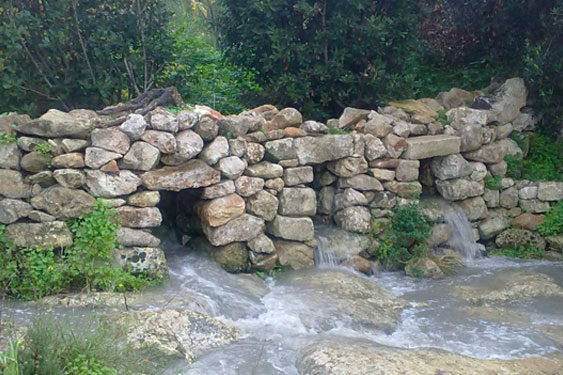
As for the Baħrija valley, rubble and fresh tracks indicate that illegal activity has been taking place at the exact location of the habitat of the Maltese Freshwater Crab. Part of the stream alongside a rubble wall has been filled with soil and no water streams run through this protected site any longer. Furthermore, reeds found close to the area have been cut down and burnt. The reeds used to form a canopy over small pool where freshwater crabs had been observed over a number of years.